
Insights

AI Data Privacy Agreements: A K-12 District Guide

Learn how K-12 districts craft enforceable AI Data Privacy Agreements, audit zero-training clauses, and protect student records under FERPA.

Published By SchoolAmplified Editorial Team 9 min read
  • Superintendents
  • Chief Technology Officers
  • Directors of Technology
  • Assistant Superintendents of Curriculum
  • District Legal Counsel
  • School Board Members
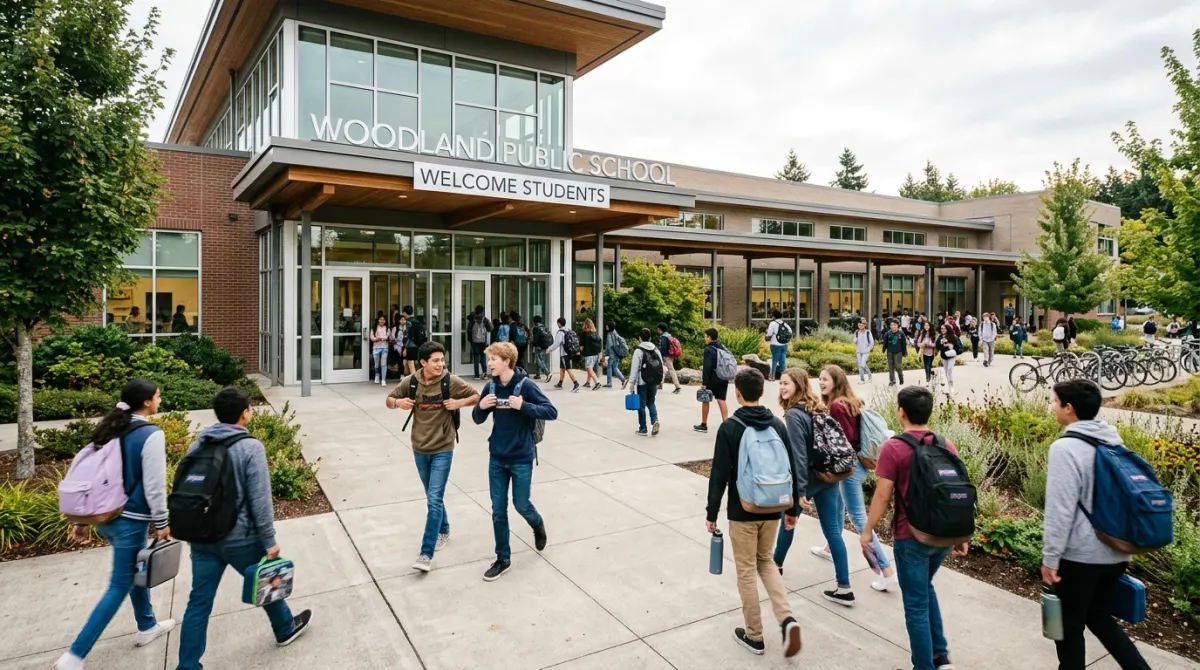
A district administrative workspace showing technology leaders reviewing data privacy agreements and software security specifications.

9 min read

Governing AI Data Privacy in K-12 Procurement

Contractual guardrails, zero-training mandates, and technical audit verification for school districts.

School district technology leaders face an unprecedented contracting challenge as artificial intelligence systems permeate enterprise software and classroom applications. Traditional standard educational software contracts and click-through terms of service were never engineered to govern large language models, dynamic vector databases, or continuous telemetry harvesting. When school systems adopt generative platforms without customized AI Data Privacy Agreements (DPAs), they risk exposing student personally identifiable information (PII), confidential staff evaluations, and sensitive special education records to third-party model training pipelines.

Establishing robust, enforceable data privacy contracts is no longer merely an IT procurement checkbox; it is a core leadership imperative. Guidance from the Institute of Education Sciences emphasizes that unmanaged adoption introduces severe risks, making thoughtful governance and clear guardrails essential (nces.ed.gov). District leaders must replace passive vendor assurances with rigorous contractual language, strict technical isolation requirements, and verifiable audit rights. Aligning procurement standards with practical evidence-based AI procurement practices ensures that districts protect legal compliance, maintain family trust, and safeguard institutional data assets.

The Shifting Landscape of EdTech Contracts and AI Data Boundaries

For decades, school district software procurement centered on cloud storage, relational databases, and static web applications. Vendor contracts focused primarily on uptime service-level agreements, basic encryption standards, and standard confidentiality covenants. However, generative AI introduces generative inference engines that process unstructured text, generate synthetic media, and often rely on user prompts to optimize proprietary model weights.

When staff members or students input prompts into generic consumer or commercial AI tools, that text often traverses external API endpoints where vendor terms permit data retention for continuous product improvement. In an educational context, this practice creates severe data leakage vulnerabilities. A prompt containing a student behavior summary, an Individualized Education Program (IEP) accommodation note, or an unreleased board communication draft can inadvertently become permanent training data within a commercial foundational model.

To mitigate these vulnerabilities, district procurement teams must establish a distinct AI addendum to all master services agreements. These agreements must draw an uncompromising boundary between commercial software features and enterprise educational data boundaries. Ensuring comprehensive K-12 AI due diligence requires IT and legal teams to analyze data flows across the entire software lifecycle—from initial prompt ingestion to temporary caching, vector indexing, and model output generation.

Essential Legal Foundations: FERPA School Official Exceptions and COPPA

Federal privacy statutes establish non-negotiable boundaries for how school districts share educational records and student information with third-party technology providers. Under the Family Educational Rights and Privacy Act (FERPA), educational agencies may disclose PII from education records without prior parental consent only when a vendor satisfies the specific criteria of the 'School Official' exception (34 CFR 99.31(a)(1)(i)).

To qualify legitimately under the school official exception, an AI vendor must meet four critical statutory tests:

  1. Direct Administrative Control: The contractor must perform an institutional service or function for which the district would otherwise use internal employees, remaining under the direct control of the district regarding the use and maintenance of education records.
  2. Legitimate Educational Interest: The vendor's access must be strictly limited to data necessary to fulfill its designated educational or operational service.
  3. Prohibition on Secondary Use: The vendor is legally prohibited from using student PII for any purpose other than the contracted educational service, explicitly forbidding secondary data monetization, commercial profiling, or model refinement.
  4. Redisclosure Restrictions: The vendor cannot redisclose student records to third parties or downstream subprocessors without explicit written district authorization.

Simultaneously, district DPAs must incorporate compliance requirements under the federal Children's Online Privacy Protection Act (COPPA). When districts consent on behalf of parents for students under age 13, that consent is legally valid only if the software is utilized solely for educational purposes and contains zero commercial tracking, behavioral advertising, or unapproved data profiling. Federal definitions published in the Federal Register highlight that AI integration must directly support student outcomes and instruction under strict district oversight (thefederalregister.org).

```
+----------------------------------------------------------------------------+
| DISTRICT AI PRIVACY CONTRACT ARCHITECTURE |
+----------------------------------------------------------------------------+
| [FERPA School Official Mandate] |
| * Direct district control over data lifecycle and retention |
| * Strict prohibition on secondary data use or commercial monetization |
| |
| [Zero-Model-Training Covenant] |
| * Explicit ban on using district prompts, logs, or files for model training|
| * Immediate contractual voidance and penalties upon unauthorized training |
| |
| [Technical Tenant Isolation] |
| * Dedicated enterprise cloud tenants with Customer-Managed Keys (CMEK) |
| * Cryptographic isolation preventing cross-tenant data pooling |
| |
| [Subprocessor Governance & Logging] |
| * Complete transparency of upstream model providers (e.g., Azure, Bedrock) |
| * Real-time automated API logging and immutable district audit access |
+----------------------------------------------------------------------------+
```

Mandatory DPA Clauses: Prohibiting Public Model Training and Telemetry Leakage

The centerpiece of any modern district AI Data Privacy Agreement is an explicit, unconditional prohibition against model training. Generic clauses stating that 'vendor respects user privacy' or 'vendor will not sell student data' are insufficient. Modern AI agreements must feature specialized covenants targeting machine learning pipelines.

District legal counsel should mandate the following non-negotiable contractual clauses across all AI vendor agreements:

District Perspective

The work gets easier when teams operate from shared information

Communication, continuity, and implementation improve when the model is more coordinated.

  • Eliminate standard click-through terms by requiring custom AI Data Privacy Agreements that strictly prohibit model training on district data.
  • Enforce FERPA school official exceptions and amended COPPA compliance through explicit subprocessor disclosures and tenant isolation.
SuperintendentsChief Technology OfficersDirectors of Technology
The work gets easier when teams operate from shared information

District context

The work gets easier when teams operate from shared information

Communication, continuity, and implementation improve when the model is more coordinated.

* Absolute Model Training Prohibition: 'Vendor warrants and agrees that no district data—including but not limited to student records, staff inputs, user prompts, system responses, uploaded source documents, audio transcripts, or telemetry—shall be utilized to train, fine-tune, retrain, benchmark, or validate any artificial intelligence model, machine learning algorithm, or neural network owned by Vendor or any third party.'
* Zero Human Review of Raw Customer Prompts: 'Vendor shall not permit human employees, contractors, or third-party reviewers to view, inspect, or manually annotate district prompts or generated outputs for model optimization or quality assurance without explicit, prior written authorization from the District.'
* Prompt and Context Window Deletion Schedules: 'Vendor shall ensure that user prompts and contextual inputs processed during inference are purged from active memory immediately upon completion of the inference request, with temporary cache logs retained for no longer than thirty (30) calendar days solely for system security and abuse monitoring.'
* Telemetry Anonymization and Restriction: 'Vendor agrees that diagnostic telemetry gathered from district usage shall be strictly technical (e.g., latency, error codes, HTTP status) and shall never capture or encode user prompts, text inputs, semantic embeddings, or student identifiers.'

Failure to include these technical specifications leaves the district exposed to silent model updates where consumer-facing features bleed into enterprise applications without administrative awareness.

Data Ownership, Tenant Isolation, and Subprocessor Disclosures

A comprehensive AI DPA must reaffirm that the school district retains exclusive, unencumbered ownership of all intellectual property, source files, prompt logs, and generated content. The contract must state explicitly that the vendor acquires no ownership rights, implied licenses, or intellectual property claims over district data processed through the platform.

Furthermore, contractual language must specify technical data architecture requirements. In enterprise deployments, districts should require dedicated tenant isolation rather than multi-tenant pooled architectures where data separation relies solely on software-level application filtering. Enterprise AI architectures must support encryption in transit (TLS 1.3) and encryption at rest (AES-256), ideally integrating customer-managed encryption keys (CMEK) that allow the district to revoke data access instantly.

```
+----------------------------------------------------------------------------+
| SUBPROCESSOR TRANSPARENCY & DATA FLOW |
+----------------------------------------------------------------------------+
| [District Staff / Student User] |
| | |
| v (Encrypted TLS 1.3 / Enterprise Single Sign-On) |
| [Vendor Core Application Layer] |
| | |
| +---> [Subprocessor A: Dedicated LLM Cloud Instance (e.g., Azure)] |
| | * Zero-Data-Retention Agreement Enforced |
| | * Strict Geo-Fencing (Contiguous United States) |
| | |
| +---> [Subprocessor B: Vector Database Search Index] |
| | * Isolated Tenant Encryption |
| | * Automated Purge Upon Contract Termination |
+----------------------------------------------------------------------------+
```

Subprocessor governance is equally critical. Generative AI applications rarely operate as monolithic stacks; edtech platforms frequently route prompts to third-party cloud infrastructure and foundation model providers such as Microsoft Azure OpenAI Service, AWS Bedrock, or specialized speech-to-text engines. The DPA must mandate that the vendor disclose all third-party subprocessors in writing. Any future addition or replacement of a subprocessor must require minimum 30-day advance notice and afford the district the right to terminate the contract without financial penalty if the new subprocessor fails district security standards.

Defining Verifiable Audit Rights and Automated Compliance Logging

Contractual promises are only as dependable as a district's ability to verify them. Technology agreements that forbid model training but deny district audit access create an accountability vacuum. Research on state approaches to educational AI emphasizes that without structured evidence infrastructure and monitoring capabilities, school systems cannot objectively determine whether software tools operate safely (crpe.org).

District DPAs must secure concrete technical audit rights and automated reporting mechanisms:

* Immutable Access Logs: The software must provide administrative dashboards allowing district IT teams to review complete audit trails of system interactions, user queries, role-based access events, and data export timestamps.
* Independent Third-Party Attestation: Vendors must provide annual System and Organization Controls (SOC 2 Type II) compliance reports covering security, availability, and confidentiality trust principles, alongside external penetration testing summaries.
* Data Sovereignty Verification: The vendor must certify in writing that all district data, primary data centers, and backup facilities reside physically and logically within the continental United States, adhering to state-specific student data sovereignty laws.
* Right to Technical Inspection: In the event of a suspected data breach or unauthorized telemetry disclosure, the district retains the contractual authority to conduct an independent technical audit of the vendor's API logs and tenant configurations.

Structuring Measurable Pilot Off-Ramps and Contractual Stop Conditions

When districts evaluate new AI technologies through micro-pilots or controlled trials, contractual protections must be active before testing begins. Open-ended software trials that rely on informal vendor agreements frequently transition into multi-year commitments without rigorous administrative vetting. Guidance from Digital Promise highlights that educational leaders should leverage pilots with strong monitoring, evaluation, and safeguards before authorizing wide releases (digitalpromise.dspacedirect.org).

A comprehensive AI DPA must define enforceable operational stop conditions. If a software system breaches predetermined privacy standards, generates severe factual hallucinations, or fails identity access controls, the district must have the contractual authority to immediately suspend testing and terminate the contract with a full refund of unearned fees.

| Evaluation Dimension | Contractual Standard | Verification Protocol | Enforceable Stop Trigger |
| :--- | :--- | :--- | :--- |
| Data Sovereignty | Zero unauthorized PII transmission or public model training | Automated network packet and API gateway audit | Immediate software suspension and full data purge within 24 hours |
| Factual Reliability | < 1.0% hallucination rate on policy and handbook queries | Bi-weekly prompt-response sampling against district ground truth | Workflow deactivation pending vendor remediation within 5 days |
| Identity & Access | 100% enforcement of Enterprise SSO and Role-Based Access Control | IT identity federation and permission group logs | Contract termination if uncorrected within 48 hours |
| Accessibility | 100% conformance with WCAG 2.1 Level AA and Section 508 | Independent automated and manual VPAT review | Forfeiture of contract if accessibility barriers persist 14 days |
| Human Oversight | Mandatory human verification gate for all public or student outputs | System workflow audit log verification | Immediate deplatforming of automated broadcast functions |

Embedding these clear thresholds directly into pilot contracts ensures that district leaders maintain control over edtech deployments and avoid vendor lock-in. Establishing verifiable operational benchmarks reflects the core principles of district AI quality assurance and risk mitigation.

Accessibility, Security Benchmarks, and Civil Rights Assurances

District Perspective

District leadership needs clearer signals and stronger communication rhythm

Systems feel more credible when guidance and public experience stay connected.

  • Enforce FERPA school official exceptions and amended COPPA compliance through explicit subprocessor disclosures and tenant isolation.
  • Incorporate automated audit logging and contractual stop triggers to ensure immediate software suspension upon any unauthorized data egress.
District leadership needs clearer signals and stronger communication rhythm

Visible alignment

District leadership needs clearer signals and stronger communication rhythm

Systems feel more credible when guidance and public experience stay connected.

Data privacy cannot be separated from accessibility and digital equity. When district staff or students interact with generative tools, those platforms must provide equitable access for individuals with disabilities and multilingual communities. Contractual agreements must mandate full conformance with Web Content Accessibility Guidelines (WCAG) 2.1 Level AA standards, as required by Section 504 of the Rehabilitation Act and Title II of the Americans with Disabilities Act.

District DPAs must require vendors to submit a current, detailed Voluntary Product Accessibility Template (VPAT) certified by an independent testing entity. Contracts should stipulate that any identified accessibility barrier—such as screen reader incompatibility, keyboard navigation failures, or poor color contrast—must be remediated at the vendor's expense within a designated timeframe.

Furthermore, agreements must include non-discrimination covenants. Vendors must warrant that their underlying algorithms and generative models have undergone structured bias testing to prevent algorithmic bias or discriminatory output generation targeting protected student classifications under Title VI of the Civil Rights Act of 1964.

A 10-Point AI Data Privacy Agreement Checklist for District Leaders

Before executing any contract, procurement order, or software pilot involving artificial intelligence, district technology leaders, curriculum directors, and legal advisors should evaluate the agreement against this practical 10-point checklist:

* [ ] 1. Explicit Zero-Training Covenant: Confirm unambiguous contractual language prohibiting the use of district prompts, student records, or user telemetry for model training or tuning.
* [ ] 2. FERPA School Official Alignment: Ensure the contract establishes direct district administrative control and strictly limits data access to legitimate educational functions under 34 CFR 99.31.
* [ ] 3. Subprocessor Transparency: Require a comprehensive, binding list of all third-party model providers, cloud hosts, and database vendors with mandatory 30-day notice for changes.
* [ ] 4. Dedicated Tenant Isolation: Mandate enterprise tenant separation with end-to-end encryption in transit (TLS 1.3) and at rest (AES-256), excluding multi-tenant public pools.
* [ ] 5. Strict Data Retention & Purge Timelines: Codify explicit schedules requiring prompt cache deletion within 30 days and complete cryptographic data destruction upon contract termination.
* [ ] 6. Certified Human-in-the-Loop Workflows: Mandate that software interfaces require certified district staff authorization before transmitting any generated communication, summary, or report.
* [ ] 7. Enterprise Identity Federation: Verify integration with district Single Sign-On (SSO) systems (e.g., SAML 2.0, OIDC) with granular role-based access permissions.
* [ ] 8. Independent Security Attestation: Secure current SOC 2 Type II compliance reports and third-party penetration testing documentation verifying vendor security controls.
* [ ] 9. Accessibility Conformance (WCAG 2.1 AA): Review a certified VPAT confirming complete screen reader and assistive technology compatibility.
* [ ] 10. Contractual Stop Conditions: Embed measurable performance and security thresholds granting the district immediate termination and refund rights upon compliance failure.

District leaders can integrate these verification items directly into their ongoing district AI policy audits to maintain systematic oversight across all operational departments.

Grounding Operations in an Authoritative District Single Source of Truth

Drafting comprehensive legal agreements solves only half of the district governance equation; operational architecture must enforce those contractual boundaries in daily practice. When administrative staff and school principals utilize ungrounded generative chatbots for parent newsletters, translation workflows, or policy explanations, they risk generating factual inaccuracies even when commercial privacy terms are signed.

To ensure operational safety, school systems must anchor all generative administrative workflows to an authoritative single source of truth. Rather than allowing software models to extrapolate answers from public internet data, enterprise educational platforms must utilize deterministic retrieval grounded exclusively in verified district board policies, student handbooks, and official academic calendars.

By uniting binding AI Data Privacy Agreements with governed internal knowledge architecture, school districts protect sensitive student records, eliminate hallucinations, and establish lasting community trust. This integrated approach ensures that technological efficiency serves the district's educational mission while maintaining uncompromising data sovereignty. Leaders seeking to establish these enterprise protections can explore SchoolAmplified's commitment to security, trust, and human oversight across all administrative communication workflows.