

Insights

AI Telemetry and Subprocessors: A K-12 District Guide

Learn how K-12 district leaders can audit AI telemetry, prevent student model training, and govern third-party subprocessors under federal privacy law.

Published By SchoolAmplified Editorial Team 9 min read
  • Superintendents
  • Chief Technology Officers
  • Directors of Instructional Technology
  • School Board Members
  • District Legal Counsel
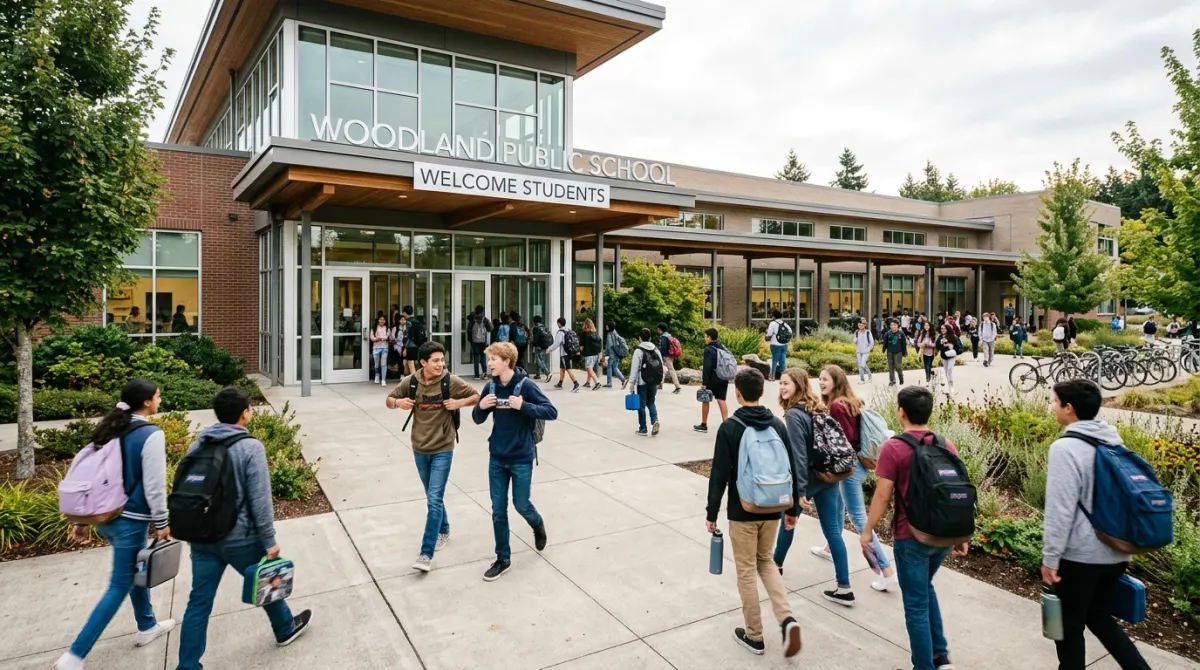
A school district technology leadership team reviewing software subprocessor architectures and telemetry privacy controls on a display.

9 min read

Governing K-12 AI Telemetry & Subprocessor Pipelines

Operational guidelines for protecting student data persistence, downstream subprocessor routing, and telemetry streams.

When school districts evaluate artificial intelligence tools, compliance reviews traditionally center on direct inputs: student rosters, names, identification numbers, and teacher-submitted text. However, the modern generative AI supply chain operates on a deeper technical tier that traditional software agreements rarely capture. Background telemetry streams, user behavioral signatures, prompt token logs, and downstream cloud subprocessors constantly handle district interactions. Without deliberate technical and legal governance, these invisible data channels can expose educational records to persistent model training, third-party commercial re-identification, and compliance violations under federal and state privacy statutes.

State education leaders and standards organizations are actively responding to these architecture risks. In September 2026, the District of Columbia Office of the State Superintendent of Education released its osse.dc.gov AI Model Policy for Staff Use, establishing strict parameters around data persistence, vendor retraining prohibitions, and routine audit cadences. Simultaneously, national consortiums and industry stakeholders have begun codifying binding restrictions that explicitly classify telemetry, memory files, and behavioral keystrokes as protected student records (edweek.org). District technology leaders can no longer treat telemetry as harmless operational metadata; it must be audited and governed as a core component of educational records.

The Hidden Layer: How Telemetry and Subprocessors Put School Data at Risk

Every time an educator, administrator, or student interacts with an AI-enabled instructional or operational tool, the system generates two parallel categories of data: primary application data (the user prompt, document upload, and generated output) and telemetry metadata (keystroke cadence, session duration, user device profiles, prompt latency, token consumption patterns, and routing logs). In standard software agreements, vendors have routinely classified telemetry as proprietary diagnostic data, reserving unrestricted rights to harvest, de-identify, and use this information to train commercial machine learning models or optimize third-party infrastructure.

In generative AI environments, the boundary between telemetry and user content is porous. Latency tracking, prompt length distributions, and prompt error logs frequently contain fragments of original classroom prompts, including student queries or draft individualized education plans. When AI applications connect to external foundational models—such as OpenAI, Anthropic, Google Cloud, or specialized vector database hosts—they rely on complex chains of third-party subprocessors. Each subprocessor in the pipeline may log, cache, or process telemetry under separate terms of service unless the primary vendor contract explicitly binds all downstream infrastructure to the district's privacy baseline.

When districts fail to govern these subprocessor chains, they create unmonitored attack surfaces. If an EdTech vendor routes district prompts through an unvetted offshore routing proxy or an unapproved cloud subprocessor to reduce inference costs, the district loses its direct chain of custody over education records. Establishing complete visibility into telemetry flows and subprocessor relationships is therefore an imperative administrative duty.

Redefining Student Records: Why Telemetry Is Education Data

Under the Family Educational Rights and Privacy Act (FERPA), education records include information directly related to a student and maintained by an educational agency or institution. When districts outsource educational services to EdTech vendors under the FERPA school-official exception, the vendor must operate under the direct control of the district regarding the use and maintenance of education records, and cannot redisclose or use that data for unauthorized commercial purposes.

Modern district governance frameworks must modernize the definition of protected data. As highlighted in the September 2026 osse.dc.gov LEA AI Model Policy Booklet, districts must require vendors to demonstrate robust protection of all user-generated data, explicitly prohibiting vendors from leveraging any student or staff interactions for model training, product improvement, or secondary data monetization outside the contracted scope.

When negotiating Data Privacy Agreements (DPAs) or AI addenda, district technology leaders should define educational records to incorporate all of the following digital artifacts:

  1. Explicit user inputs: prompts, uploaded essays, lesson plans, meeting notes, and diagnostic records.
  2. Generated outputs: completions, grading feedback, summaries, synthetic tutoring dialogues, and diagnostic scores.
  3. Session telemetry: prompt token counts, keystroke dynamics, interaction timestamps, user workflow sequences, and interface usage tracking.
  4. Contextual memory files: vectorized retrieval embeddings, user persona caches, and persistent session states across multiple browser logins.

By codifying this expanded definition, district leaders eliminate vendor loopholes that attempt to reclassify granular classroom telemetry as exempt technical metadata. Implementing clear governing AI data boundaries ensures that every layer of the software stack complies with local board policy and federal law.

De-Identification Realities and Re-Identification Risks

Many commercial software vendors reassure district procurement teams by asserting that all captured telemetry and prompt histories are scrubbed of personally identifiable information (PII) before being stored or analyzed. While basic scrubbing removes direct identifiers like student names and email addresses, computer science research consistently demonstrates that de-identified behavioral telemetry can be linked back to individual students or staff members with high statistical probability.

District Perspective

The work gets easier when teams operate from shared information

Communication, continuity, and implementation improve when the model is more coordinated.

  • Redefine student privacy to include background telemetry, prompt histories, and inference tokens, prohibiting vendors from using school telemetry for model training.
  • Require AI vendors to disclose all downstream subprocessors and establish contractual veto rights over unvetted model routing changes.
SuperintendentsChief Technology OfficersDirectors of Instructional Technology
The work gets easier when teams operate from shared information

District context

The work gets easier when teams operate from shared information

Communication, continuity, and implementation improve when the model is more coordinated.

A student's unique combination of school schedule, login times, specialized vocabulary usage, IEP-aligned assistive reading speeds, and localized geographic IP clusters forms a distinct behavioral fingerprint. If a vendor aggregates telemetry across multiple applications to build predictive behavioral profiles, they effectively reconstruct student identity without ever storing a formal name.

Furthermore, research published by the National Center for Education Statistics on technology guardrails emphasizes that evidence-based integration requires active district management rather than passive trust in vendor assurances (nces.ed.gov). When vendor algorithms ingest scrubbed telemetry to refine large language models, those models can inadvertently memorize rare prompt patterns, potentially regurgitating sensitive district information in subsequent responses to external users. Districts must treat de-identification not as an absolute shield, but as a secondary defense that never replaces zero-retention and zero-training contractual mandates.

Managing Third-Party Vendor Subprocessor Chains

Modern AI applications are rarely monolithic; an instructional math tutor application might host its frontend on one cloud provider, route prompts through a middleware routing gateway, execute inference across multiple distinct foundation model providers, and store vector embeddings on a separate database cluster. Each of these intermediary entities is a subprocessor that touches district data.

District procurement workflows must demand full transparency into the entire subprocessor ecosystem. Software vendors must be required to provide a complete, dynamically updated subprocessor manifest before a pilot or enterprise rollout receives technical sign-off. Instructional materials reviews must also assess vendor transparency regarding where and how external AI models are integrated into classroom tools, as outlined in recent instructional frameworks (edreports.org).

```
+-----------------------------------------------------------------------------------+
| DISTRICT AI SUBPROCESSOR ESCALATION MATRIX |
+-------------------+---------------------------------------------------------------+-----------------------------------+
| SUBPROCESSOR TIER | ARCHITECTURAL FUNCTION | REQUIRED DISTRICT CONTROL |
+-------------------+---------------------------------------------------------------+-----------------------------------+
| Primary Host | Core application hosting, user authentication, UI delivery. | Direct SSO integration, SOC2 Type |
| | | II audit, FERPA-compliant DPA. |
+-------------------+---------------------------------------------------------------+-----------------------------------+
| Inference Engine | External foundation model executing prompt completions. | Zero-day retention agreement, no |
| | | model training, zero telemetry use|
+-------------------+---------------------------------------------------------------+-----------------------------------+
| Vector Database | Long-term context storage and retrieval-augmented generation. | Dedicated tenant encryption, auto-|
| | | deletion scripts upon request. |
+-------------------+---------------------------------------------------------------+-----------------------------------+
| Telemetry Monitor | Error logging, latency tracking, performance analytics. | PII masking at ingestion, 30-day |
| | | log lifecycle, no third-party sync|
+-------------------+---------------------------------------------------------------+-----------------------------------+
```

Districts should establish contractual notification requirements mandating at least 30 days of advance written notice before any vendor introduces a new subprocessor or modifies data routing paths. Technology leaders must retain explicit contractual authority to object to new subprocessors or terminate the service agreement without financial penalty if the subprocessor fails district security benchmarks.

Contractual Guardrails: Negotiating Zero Model Training Rights

School districts possess significant procurement leverage when negotiating AI terms of service. Standard consumer or commercial click-through terms are wholly unacceptable in public K-12 environments. District technology directors and legal counsel must insist on customized enterprise addenda that establish non-negotiable boundaries on data usage.

To ensure ironclad protection across all deployed systems, contracts should include specific operational covenants:

  • Zero Foundation Model Training: The vendor, its parent entities, and all downstream subprocessors are strictly prohibited from using district prompts, completions, telemetry, user feedback, or interaction metadata to train, fine-tune, align, or benchmark any public or private artificial intelligence model.
  • Data Retention Boundaries: Inference prompts and generated responses must be processed in volatile memory and purged immediately after completion delivery, with persistent storage restricted only to encrypted, district-accessible application databases.
  • Independent Security and Subprocessor Audits: The vendor must submit annual SOC 2 Type II compliance reports covering both its proprietary systems and its subprocessor relationships, alongside third-party penetration testing summaries.
  • Breach Notification and Perpetual Indemnification: The vendor must notify the district in writing within 24 to 72 hours of any confirmed or suspected unauthorized access, data spill, or subprocessor compromise involving district telemetry or content, maintaining remediation responsibilities even following contract expiration.

Districts seeking operational frameworks for testing and monitoring these terms over time should consult our guide on continuous AI audits, which details ongoing post-deployment oversight routines.

Operational Checklist for District Telemetry Audits

Conducting a telemetry and subprocessor audit requires cross-functional collaboration among instructional technology specialists, network engineers, and procurement officers. Technology teams should execute this systematic checklist for every AI application under review:

Step 1: Network-Level Data Flow Mapping - [ ] Intercept and inspect application network requests in a sandbox environment to identify all external API endpoints contacted during user sessions. - [ ] Verify that no background telemetry payloads contain unencrypted student identifiers, location tags, or unmasked prompt strings. - [ ] Confirm that all network traffic enforces TLS 1.3 encryption in transit.

Step 2: Subprocessor Manifest Verification - [ ] Review the vendor's published subprocessor list against the endpoints observed during network inspection. - [ ] Confirm that each listed subprocessor possesses an active Data Privacy Agreement matching the district's minimum legal standards. - [ ] Verify that model inference occurs exclusively in approved domestic cloud hosting regions to ensure jurisdictional compliance.

Step 3: Telemetry Lifecycle and Access Controls - [ ] Document the vendor's exact data retention window for server logs, crash reports, and system telemetry (targeting a maximum retention of 30 to 90 days). - [ ] Verify that vendor support staff access to telemetry logs is governed by role-based access controls and multifactor authentication. - [ ] Confirm the existence of automated data purging mechanisms that execute upon contract termination or formal district deletion requests.

Step 4: Administrative Telemetry Transparency - [ ] Verify that district administrators have direct access to prompt logs and usage metrics without needing to submit custom support tickets. - [ ] Confirm that individual users (staff and students) are informed via interface notices that system interactions are logged for institutional safety.

Quantitative Stop Conditions and Disabling Triggers

An audit policy without automated enforcement mechanisms fails to protect district networks when technical discrepancies arise. District leadership must establish quantitative stop conditions—objective, predefined thresholds that immediately trigger technical intervention, administrative escalation, or SSO revocation.

District Perspective

District leadership needs clearer signals and stronger communication rhythm

Systems feel more credible when guidance and public experience stay connected.

  • Require AI vendors to disclose all downstream subprocessors and establish contractual veto rights over unvetted model routing changes.
  • Implement quantifiable stop conditions that immediately suspend vendor single sign-on access upon unauthorized telemetry capture or data leakage.
District leadership needs clearer signals and stronger communication rhythm

Visible alignment

District leadership needs clearer signals and stronger communication rhythm

Systems feel more credible when guidance and public experience stay connected.

If monitoring systems or periodic technical reviews detect any of the following triggers, IT leadership must possess the contractual and operational authority to engage emergency protocols:

  • Trigger 1: Undisclosed Subprocessor Routing: If an application transmits district prompts or telemetry to an API endpoint not listed in the approved subprocessor manifest, SSO access is suspended within 4 hours pending vendor clarification.
  • Trigger 2: Telemetry Data Leakage: If technical inspection reveals cleartext student PII or session transcript text inside diagnostic error logs or analytics payloads, the tool is immediately moved to an inactive state across all district firewalls.
  • Trigger 3: Model Training Contamination: If a vendor updates its general terms of service to claim ownership or model training rights over customer telemetry, the district issues an immediate stop-work order and initiates contract termination.
  • Trigger 4: Audit Non-Compliance: If a vendor fails to provide updated subprocessor SOC 2 certifications or telemetry logging documentation within 15 business days of a formal district request, the application is restricted from further deployment.

Establishing these non-negotiable thresholds in advance depoliticizes enforcement. District leaders can review our detailed playbook on district AI off-ramps to implement standardized technical disabling procedures that protect student privacy without causing prolonged instructional disruption.

Centralizing Governed Knowledge and Family Communication

Transparent governance of AI telemetry and subprocessor chains is essential not only for regulatory compliance, but also for maintaining public trust. When parents, community members, and school boards ask how artificial intelligence is deployed in schools, district leaders must provide clear, verifiable answers grounded in facts rather than vendor marketing brochures.

Districts maintain community trust by publishing an accessible registry of all approved instructional and administrative AI applications. This registry should clearly outline the educational purpose of each tool, the specific data boundaries enforced, the cloud hosting providers utilized, and the explicit restrictions prohibiting commercial model training. Building this operational clarity requires establishing a unified single source of truth across administrative departments.

When school systems leverage administrative AI assistants like DistrictAssist for public communications, staff workflow assistance, and community engagement, governance must be built into the architectural foundation. District-controlled systems ensure that all document parsing, message synthesis, and multilingual translation operate within isolated environments where district knowledge remains fully private, telemetry is never monetized, and student data is never used to train third-party models. By combining rigorous subprocessor oversight, strict telemetry auditing, and transparent public communication, school districts can confidently harness modern technology while upholding their highest obligations to student privacy and ethical leadership.