
Insights

How districts can use AI to support social media without losing control

A realistic framework for using AI in district social media while keeping strategy, accuracy, brand voice, and human judgment intact.

February 21, 2026 SchoolAmplified Editorial Team 6 min read
  • Communications leaders
  • Superintendents
  • Community engagement teams
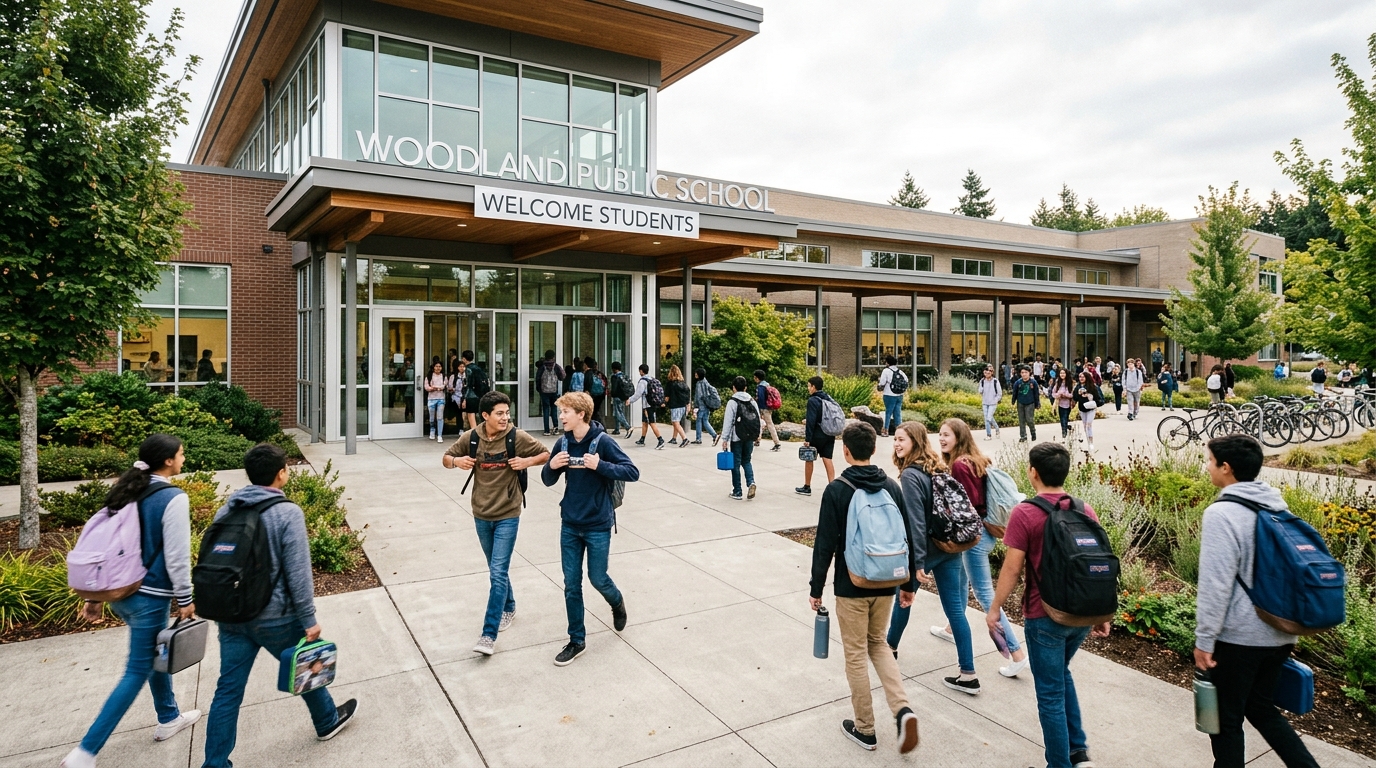
A district leader walking in front of a high school campus with students present

6 min read

Social media support should reduce manual strain, not add risk

District teams need help with planning, drafting, and consistency without surrendering approval or voice.

District social media is often one of the most visible communication channels and one of the hardest to sustain well.

The cadence is constant. The audience is broad. Expectations shift quickly. District teams are asked to share timely updates, celebrate students and staff, explain decisions, and reinforce trust, often with limited time and limited capacity. That is why AI is showing up in more conversations about district content operations.

The right question is not whether AI can generate posts. It can. The better question is whether it can support district storytelling in a way that remains accurate, coordinated, and human.

Why social media becomes difficult at the district level

District social media has more complexity than many organizations expect.

Posts often need to balance multiple goals at once:

  • reflect district priorities
  • represent schools fairly
  • maintain accessibility and clarity
  • align with community expectations
  • stay consistent with leadership tone
  • move quickly enough to stay relevant

That is difficult when content planning, approvals, and source material are fragmented. It becomes even more difficult when one or two people are carrying most of the production load.

Where AI can help responsibly

AI is useful in district social media when it supports the repetitive parts of the workflow and stays grounded in approved information.

Drafting first-pass copy

Teams can use AI to generate caption variations, campaign concepts, headline options, or draft language for recurring post types. That reduces blank-page time and helps staff produce more consistently.

Repurposing approved content

When districts already have approved newsletters, event information, or website updates, AI can help transform those materials into social-friendly formats without requiring staff to start from scratch each time.

Organizing campaign themes

District Perspective

Online rumor cycles change the pace of district leadership

Visible official channels matter more when speculation spreads faster than formal process.

  • AI should support drafting and coordination rather than replace strategy
  • Brand voice and approvals still need human ownership
Communications leadersSuperintendentsCommunity engagement teams
Online rumor cycles change the pace of district leadership

Public narrative

Online rumor cycles change the pace of district leadership

Visible official channels matter more when speculation spreads faster than formal process.

District storytelling works better when it is intentional. AI can help cluster themes, propose monthly content pillars, and turn district priorities into a more manageable publishing rhythm.

Supporting consistency

If the system is grounded in approved voice, terminology, and communication context, AI can help district teams maintain a steadier tone across posts and campaigns.

Where districts should be careful

Social media can create trust quickly, but it can also erode trust quickly. That is why AI should not be dropped into district social workflows without guardrails.

Voice should not drift into generic language

One of the most common failures in AI-generated content is that it sounds polished but impersonal. District communication should still sound like the district. That means voice guidance, editorial review, and human judgment still matter.

Accuracy still matters more than speed

If AI is drafting from incomplete or unapproved inputs, the district risks publishing content that is technically fluent but substantively off. In K-12, that is not acceptable.

Celebration content is not the same as strategic communication

Social media should not become a stream of disconnected feel-good posts. Districts need a mix of celebration, explanation, visibility, and trust-building. AI can support that mix, but it cannot decide the strategy on its own.

A better operating model for district social media

Districts get the most value from AI when it is part of a broader communication workflow.

District Perspective

The district voice needs to stay present between crises

Stronger routine communication helps communities know where trusted information lives.

  • Brand voice and approvals still need human ownership
  • Social media value increases when content planning connects back to district priorities

Response cadence

The district voice needs to stay present between crises

Stronger routine communication helps communities know where trusted information lives.

  1. Start with district-approved priorities, campaigns, and source material.
  2. Use AI to help organize ideas, draft variants, and accelerate routine production.
  3. Keep human review in place for tone, accuracy, and appropriateness.
  4. Publish through a process that connects social content to broader district messaging.
  5. Learn from what questions, responses, and engagement patterns appear over time.

That model keeps the district in control while removing some of the production burden that often slows teams down.

What communications leaders should ask before adopting AI for social

Before adding AI into the workflow, district teams should be able to answer a few practical questions:

  • Is the content grounded in approved district information?
  • Does the system help staff work faster without bypassing review?
  • Can it support multiple content types, not just one-off post generation?
  • Does it strengthen brand consistency or make the voice more generic?
  • Will it reduce manual strain for the team that has to use it every week?

If the answer to those questions is no, the tool is likely adding novelty rather than value.

District social media does not need more output for its own sake. It needs a better way to turn approved information and district priorities into consistent public storytelling.

Final thought

AI can absolutely help district social media, but only when it is used as a support layer, not a substitute for judgment.

The goal is not to automate the district’s public voice. The goal is to help communication teams plan better, draft faster, stay aligned, and keep more energy available for the parts of the work that truly need people.

Article FAQ

Questions about How districts can use AI to support social media without losing control

Why does this topic matter for district leadership?

A realistic framework for using AI in district social media while keeping strategy, accuracy, brand voice, and human judgment intact.

How does this challenge connect to SchoolAmplified?

SchoolAmplified fits these topics by helping districts reduce fragmentation, preserve context, improve communication consistency, and make district work easier to coordinate and explain.

What should a district do after reading this article?

The best next step is to identify where this issue is showing up most clearly in the district today and evaluate whether communication, visibility, or knowledge continuity is part of the problem.