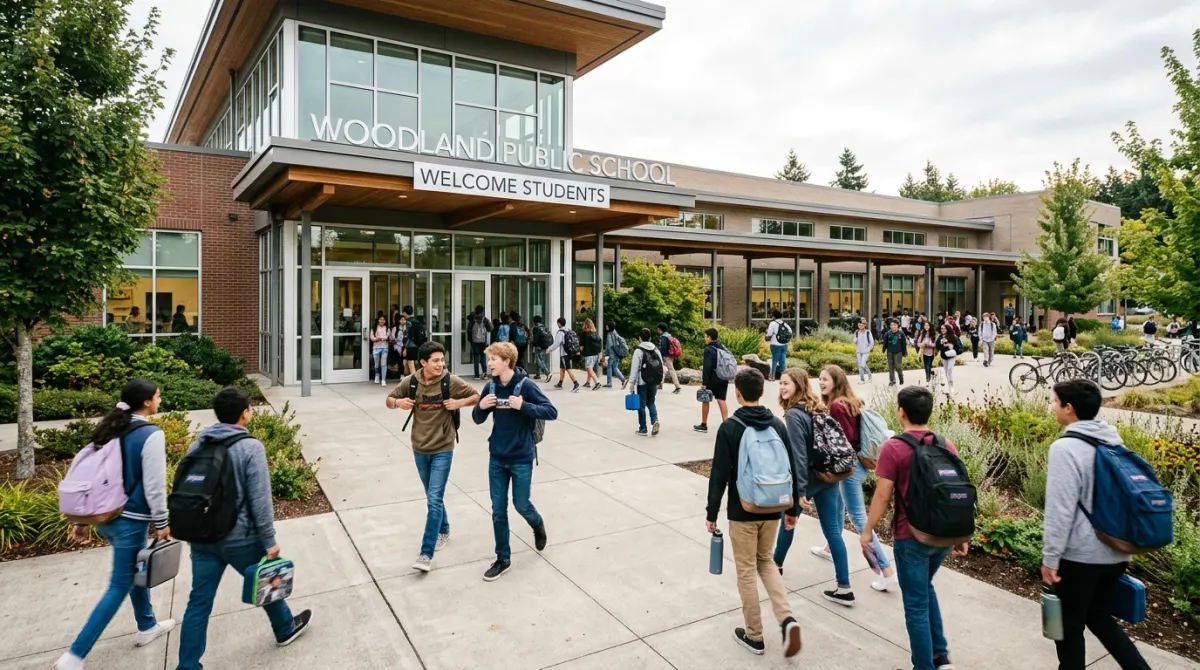

As artificial intelligence platforms expand across central offices and school sites, local educational agencies face an operational challenge: ensuring that synthetic text, automated summaries, and differentiated instructional materials meet strict standards of safety, pedagogical quality, and factual integrity. Adopting generative software without systematic review processes exposes districts to severe risks, including hallucinated policy statements, subtle curricular distortions, privacy breaches, and algorithmic bias. To safeguard educational environments, school systems must shift from passive trust in commercial software to an active, structured verification regimen.
Authoritative guidance released by state education departments underscores that administrative and instructional staff remain fully accountable for all machine-generated content. In September 2026, the Office of the State Superintendent of Education released its comprehensive guidance on responsible staff implementation osse.dc.gov. This landmark release stresses that local education agencies (LEAs) must maintain explicit human-in-the-loop oversight and execute continuous quality audits across all deployed technologies. Building this institutional capacity requires concrete evaluation checklists, enforceable stop conditions, and a centralized knowledge architecture.
The Operational Imperative for AI Output Verification
Generative language models operate on probabilistic pattern recognition rather than deterministic factual recall. Consequently, even enterprise-grade tools can produce synthetic outputs that appear grammatically polished and authoritative while containing factual errors, outdated administrative procedures, or biased representations. In a K-12 district, unchecked inaccuracies can disrupt parent trust, violate student civil rights, or compromise special education legal compliance.
When administrators or educators use software to summarize student records, draft parent notifications, or adapt reading passages, the burden of accuracy cannot rest on automated algorithms. State and federal compliance mandates—such as the Family Educational Rights and Privacy Act (FERPA), the Individuals with Disabilities Education Act (IDEA), and Section 504 of the Rehabilitation Act—demand that public school systems maintain definitive control over official decisions and communications. Integrating tools without systematic auditing exposes districts to compliance liability and instructional regression.
To manage this vulnerability, district technology and academic leaders must institutionalize standard operating procedures for reviewing machine-generated assets. Rather than treating verification as an informal personal preference, districts need structured workflows that treat every AI output as an unverified draft requiring deliberate validation against canonical district records. Aligning internal practices with an established staff AI policy model ensures that staff across all departments recognize their legal and ethical duties.
Establishing Risk Tiers for District AI Workflows
Effective oversight begins by categorizing tasks according to their potential impact on student safety, privacy, civil rights, and academic outcomes. Following the stoplight model established in the official LEA AI Model Policy booklet osse.dc.gov, district activities must be partitioned into three operational risk bands:
- Red Tier (Prohibited High-Stakes Operations): AI automation is strictly banned for unilateral decision-making involving student disciplinary sanctions, formal educator evaluations, physical biometric surveillance, and determining initial eligibility for Individualized Education Programs (IEPs) or Section 504 plans. These functions demand irreplaceable human judgment and statutory accountability.
- Yellow Tier (Conditional, High-Scrutiny Tasks): AI assistance is permitted only under structured supervision and mandatory multi-point human verification. Examples include drafting individualized accommodation phrasing, reviewing student writing submissions, monitoring activity logs on school-issued hardware, and generating diagnostic assessments. All outputs in this category require line-by-line review by certified personnel before final adoption.
- Green Tier (Permitted Low-Risk Operational Support): Generative software is permitted with basic professional awareness and standard proofreading. This tier encompasses brainstorming raw lesson ideas, drafting general community newsletters, formatting logistical schedules, and reorganizing curriculum pacing outlines.
By codifying these clear operational boundaries, district leadership prevents software misuse in legally sensitive domains while providing structured enablement for routine administrative productivity.
Structured Verification Protocols for Classroom and Office Use
Human oversight must be defined through actionable verification routines rather than vague policy declarations. District leadership should institute a three-step verification rubric that every staff member applies before approving or publishing any AI-generated asset: